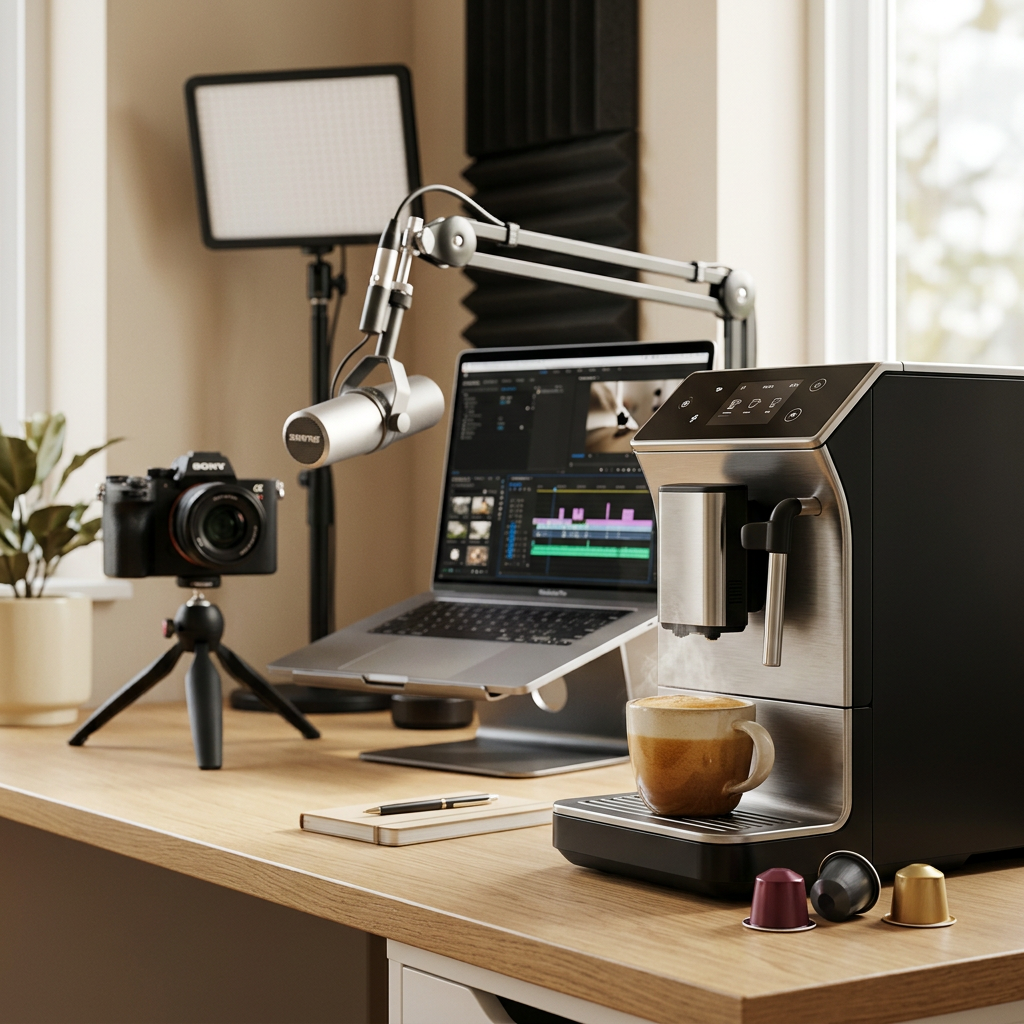
Next-Gen Coffee Machines for Content Creators: Brewing Versatility, Smart Workflows, and Better Coffee
The right coffee machine can do more than prepare your favorite drink. For content creators, streamers, remote professionals, and home studio enthusiasts, it can become part of a daily workflow—helping save time, create engaging coffee content, and deliver a more consistent experience from one recording session to the next.
A next-generation coffee setup does not necessarily need to be complicated or expensive. The best choice depends on your preferred brewing style, available workspace, daily schedule, and the type of content you create. While some coffee machines focus on convenience and capsule brewing, others are designed for espresso, drip coffee, or alternative brewing methods.
In this guide, we explore the features that matter most when choosing a modern coffee machine, compare popular brewing methods, and share practical tips for building a coffee station that looks great on camera and works efficiently behind the scenes.
Why Coffee Machines Matter for Content Creators
Coffee has become a natural part of lifestyle videos, morning routines, productivity content, livestreams, and home-office setups. A well-designed coffee station can add atmosphere to a workspace while giving creators another opportunity to produce engaging visual content.
However, appearance is only one part of the equation. A suitable coffee machine should fit seamlessly into your routine without creating unnecessary noise, clutter, or maintenance work.
1. Consistency for Repeatable Content
Consistency is essential when filming recurring videos or demonstrating a recipe across multiple episodes. Using the same machine, coffee quantity, cup size, and preparation routine can make your results more predictable.
For creators who review coffee products or produce tutorials, repeatable preparation also makes comparisons more useful. Small changes in coffee quantity, grind size, water temperature, and brewing time can influence the final taste.
2. A More Efficient Daily Workflow
Preparing coffee should not become another complicated task on a busy production day. A convenient machine can help simplify the process before a livestream, during an editing session, or between recording takes.
Capsule coffee machines are particularly appealing to people who value straightforward preparation and minimal handling. Traditional espresso machines and manual brewing equipment may offer more control, but they can require additional preparation and cleanup.
3. A More Attractive Studio Setup
Coffee equipment can complement a creator’s visual identity. A compact machine, coordinated accessories, attractive cups, and organized coffee capsules can turn an ordinary desk corner into a polished coffee station.
For product reviewers, lifestyle influencers, and home-office creators, this setup can also provide a consistent background for photographs, short-form videos, and product demonstrations.
Understanding Different Coffee Brewing Methods
The term “multi-type coffee machine” can describe equipment that supports multiple drinks or brewing functions, but not every machine offers every method. Espresso, filter coffee, and cold brew use different preparation techniques, so it is important to check the actual capabilities of a product before purchasing.
The following comparison can help you choose a setup that matches your content and coffee preferences.
| Brewing Method | Main Characteristics | Best For | Considerations |
|---|---|---|---|
| Capsule coffee | Convenient, portioned preparation | Busy routines, quick coffee videos, small workspaces | Requires compatible capsules |
| Espresso | Concentrated coffee with intense flavor | Latte art, espresso recipes, detailed coffee reviews | Usually requires more technique and cleaning |
| Drip coffee | Convenient preparation, often suitable for larger servings | Morning routines, work sessions, everyday coffee | Typically takes longer than capsule preparation |
| Pour-over | Manual control over water flow and extraction | Brewing tutorials, specialty coffee content | Requires attention and a few additional tools |
| Cold brew | Coffee steeped in cold or room-temperature water over an extended period | Iced coffee recipes and summer content | Requires advance preparation |
These are general comparisons rather than specifications for any particular machine. For an independent overview of brewing methods, see the National Coffee Association’s coffee brewing guide.
Key Features to Consider When Choosing a Modern Coffee Machine
A machine may look impressive in a product photograph, but the most useful features are those that make everyday coffee preparation easier.
Compact Design and Workspace Efficiency
Desk space is valuable, especially when a creator shares a room with cameras, microphones, lighting, monitors, and other recording equipment.
Before purchasing, measure the available countertop or shelf space. Consider the machine’s height as well as its width, particularly if it needs to fit beneath a cabinet or sit beside a monitor.
A compact coffee machine can be an excellent choice for a small apartment, home office, or portable content setup.
Simple and Reliable Operation
Think about how much time you want to spend preparing each drink. Capsule-based systems typically reduce the need to measure loose coffee grounds, while manual brewing methods provide more control over the preparation process.
Look for clearly documented operating instructions, straightforward controls, and an accessible water reservoir. If you plan to feature the machine in tutorials, an easy-to-understand workflow can also make demonstrations more engaging.
Brewing Flexibility
Some creators enjoy experimenting with different coffee recipes, while others prefer a dependable cup with minimal effort.
If variety matters to you, check whether the machine supports different serving sizes, compatible capsule types, milk-based recipes, or other functions that you actually intend to use.
Do not assume that a single machine can prepare espresso, pour-over coffee, and cold brew simply because it is advertised as versatile. Confirm each brewing function in the manufacturer’s specifications.
Noise Levels During Recording
Coffee preparation can introduce unwanted background noise into voice-overs, interviews, podcasts, and livestreams.
If you record audio in the same room where you prepare coffee, check independent reviews for information about operating noise. Consider recording coffee-making segments separately from spoken content when necessary.
A quiet machine is useful, but even a relatively quiet device may produce noticeable sounds during brewing, heating, or capsule ejection.
Cleaning and Long-Term Maintenance
Cleaning is easy to overlook when comparing product features, yet it directly affects the convenience of daily use.
Check whether the drip tray, water tank, and other removable parts are easy to access and clean. Follow the manufacturer’s instructions for descaling and any required cleaning cycles.
For capsule machines, also check capsule compatibility and disposal requirements. For machines that use loose grounds, consider how much cleanup is needed after each preparation.
Smart Features: Useful, but Not Essential
Some premium coffee machines offer app connectivity, scheduling, programmable drink settings, or remote monitoring. These functions can be helpful in certain workflows, but they are not universal.
For many creators, reliable operation and easy cleaning are more valuable than a long list of connected features. Choose smart functionality only when it solves a genuine problem in your routine.
How to Choose the Right Coffee Machine for Your Creator Setup
The best coffee machine is the one that fits your actual working habits rather than the one with the longest feature list.
| Your Main Priority | A Suitable Starting Point | Why It May Work |
|---|---|---|
| Fast coffee before recording | Capsule coffee machine | Simplifies preparation and portioning |
| Detailed brewing tutorials | Pour-over equipment or an espresso machine | Provides opportunities to demonstrate technique |
| Coffee for longer work sessions | Drip coffee machine | Can prepare multiple servings, depending on capacity |
| Iced coffee and seasonal recipes | Cold brew equipment or a suitable coffee maker | Supports chilled coffee recipes |
| A small, portable setup | Compact coffee machine | Helps reduce equipment clutter |
| Milk-based coffee videos | An espresso machine or compatible system | May support cappuccino and latte-style drinks, depending on the model |
Use this table as a starting point, then verify the capacity, dimensions, power requirements, compatible accessories, and available functions of the specific product.
Practical Tips for Creating Better Coffee Content
You do not need a professional café setup to make coffee videos more interesting. A few thoughtful production choices can improve both the viewing experience and your workflow.
Create a Consistent Coffee Routine
Choose a repeatable preparation method for recurring content. Keep your cup, lighting, camera angle, and preparation steps consistent when comparing different coffee varieties or accessories.
For more technical demonstrations, record variables such as coffee quantity, water temperature, and preparation time. This makes your content easier for viewers to follow and reproduce.
Use Lighting to Highlight the Brewing Process
Soft, directional lighting can emphasize the coffee’s color, the texture of milk, and the details of the machine. Keep reflections on glossy surfaces under control and avoid placing bright lights directly behind transparent cups.
A clean background and a small number of coordinated accessories usually look more professional than a crowded counter.
Plan Your Coffee Content in Advance
If you are preparing several videos in one session, organize your recipes, equipment, cups, and ingredients before filming begins.
Cold brew is a good example of a drink that requires advance planning because its preparation involves an extended steeping period. Prepare it ahead of time according to your chosen recipe rather than expecting it to be ready immediately.
For hot coffee demonstrations, prepare each drink close to the time of filming so that its appearance and temperature are appropriate for the shot.
Make Product Demonstrations Useful
If you review or recommend coffee equipment, show the real preparation process rather than relying entirely on close-up product shots.
Useful footage can include filling the water reservoir, inserting a compatible capsule, starting the machine, collecting the drink, and cleaning the removable parts. Demonstrate only the functions supported by the product you are using.
This approach helps viewers understand the equipment while making the content more informative and credible.
A Simple Coffee Station Checklist
Before finalizing your creator coffee station, make sure you have covered these essential details:
- Workspace and dimensions: Measure the available space and confirm that the machine fits comfortably.
- Electrical safety: Check the machine’s power requirements and leave sufficient clearance around the equipment.
- Coffee compatibility: Confirm which coffee capsules or coffee types the machine supports.
- Equipment placement: Position the machine away from camera equipment, cables, and sensitive microphones.
- Essential supplies: Keep cups, coffee supplies, and cleaning materials within easy reach.
- Regular cleaning: Empty the drip tray and clean removable components according to the manufacturer’s instructions.
- Recording quality: Test the machine’s operating noise before recording voice-overs or livestreams.
- Maintenance routine: Follow the manufacturer’s recommendations for cleaning and descaling.
A well-organized coffee station reduces interruptions, keeps your workspace tidy, and helps you maintain a consistent routine—even on your busiest production days.
Pros and Cons of a Versatile Coffee Setup
| Advantages | Potential Drawbacks |
|---|---|
| Can make coffee preparation part of an engaging content format | Additional equipment can increase the initial cost |
| A compact machine may save valuable workspace | Small machines may have limited water or serving capacity |
| Repeatable preparation can simplify recurring videos | Results still depend on the coffee, settings, and preparation method |
| Different brewing methods create opportunities for varied content | Multiple brewing systems may require different accessories |
| Organized equipment can improve the appearance of a studio | Cleaning and maintenance remain necessary |
The key is to balance versatility with practicality. A machine that performs one task well may be a better investment than a more complex setup with features you rarely use.
Explore a Capsule Coffee Machine from UNIQUES BRAND
If convenience, a compact coffee station, and a straightforward preparation routine are high on your list, a capsule coffee machine is worth considering.
UNIQUES BRAND offers a capsule coffee machine that you can explore as part of your search for a coffee solution suited to your workspace.
Before ordering, review the product page for the current specifications, compatible capsule types, dimensions, operating instructions, and included accessories. These details will help you determine whether the machine matches your preferred coffee routine and available space.
Whether you are building a home-office coffee corner or adding a coffee-making segment to your next video, choose equipment that supports your workflow without introducing unnecessary complexity.
Frequently Asked Questions
What is the best coffee machine for content creators?
The best option depends on your content and daily routine. Capsule machines can suit creators who prioritize convenience, while espresso machines and manual brewing equipment may be more appropriate for detailed tutorials and specialty coffee demonstrations.
Are multi-function coffee machines worth buying?
They can be worthwhile if you regularly use their different functions. However, a dedicated machine may offer better value when you mainly prepare one type of coffee. Compare the actual brewing capabilities, maintenance requirements, price, and available space before deciding.
Can one coffee machine make espresso, pour-over, and cold brew?
Some products support multiple functions, but this capability should never be assumed. Espresso, pour-over, and cold brew use different brewing processes, and many machines are designed for only one method. Always check the manufacturer’s specifications.
Are capsule coffee machines suitable for small desks?
Some compact models can work well in small spaces. Measure the available area and check the machine’s dimensions, clearance requirements, water capacity, and access to its controls before purchasing.
Do capsule coffee machines require special coffee capsules?
Most capsule systems require compatible capsule formats. Compatibility varies by machine, so check the product documentation before buying capsules from a third-party supplier.
How often should a coffee machine be cleaned?
Empty and clean removable components as needed, and follow the manufacturer’s instructions for routine cleaning and descaling. The appropriate descaling interval depends on the machine, water hardness, and frequency of use.
How can I reduce coffee machine noise in videos?
Test the machine before recording, keep it away from sensitive microphones when possible, and record preparation footage separately from voice-overs if the operating noise is distracting. Editing can then help you balance the brewing sounds with narration.
What should I check before buying a coffee machine online?
Review the dimensions, supported brewing method, capsule or coffee compatibility, water capacity, power requirements, cleaning instructions, included accessories, warranty information, and shipping or return conditions.
Final Thoughts
A next-generation coffee setup should make your routine easier, not more complicated. For content creators, the right machine combines practical operation, a suitable footprint, manageable maintenance, and a brewing style that fits the content they want to produce.
Start by identifying your priorities: convenience, creative control, portability, or the ability to prepare different drinks. Then compare real product specifications rather than relying on broad marketing claims.
With the right equipment and a thoughtfully organized workspace, coffee preparation can become more than a daily habit—it can be a useful part of your creative process, your home-office routine, and your next piece of engaging content.
Machine noise is easy to forget about until you’re mid-recording and the pump kicks in beside your mic.